Budapest’s Citadella Is Back — and Now the City Is Dreaming of a Funicular to Reach It
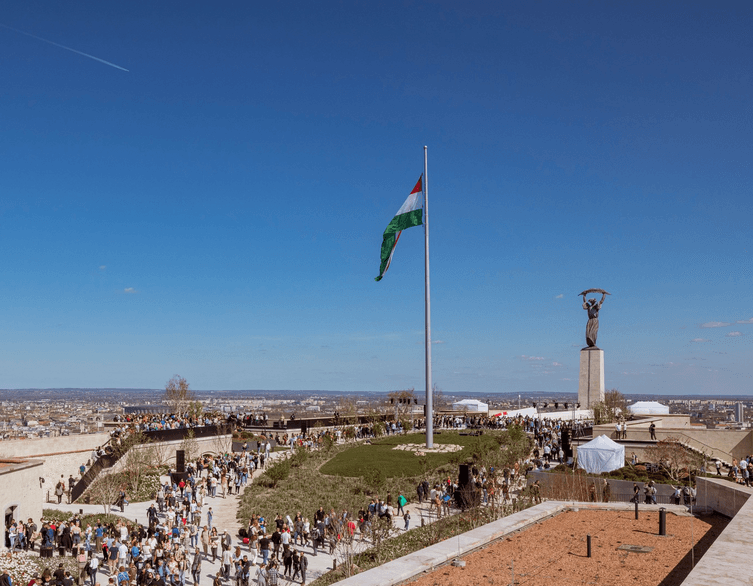
After more than a decade behind scaffolding and construction fences, one of Budapest’s most iconic hilltop landmarks has finally reopened its gates — and the city is already thinking about what comes next. The freshly renovated Citadella on Gellért Hill welcomed its first visitors on April 5, 2026, marking the end of an eleven-year restoration that has transformed the historic fortress into something genuinely worth the climb. And with the crowds now flowing back up the hill, a long-dormant idea is making a comeback: a funicular that would whisk visitors to the top in just ninety seconds.
A Fortress Reborn
The Citadella has loomed over Budapest since the mid-nineteenth century, built by the Habsburg Empire following the failed Hungarian Revolution of 1848 as a show of military dominance over the city below. For generations of visitors, it offered one of the finest panoramic views in Central Europe — a sweeping 360-degree outlook over the Danube, Buda Castle, and the entire Budapest skyline. Then, in 2015, the gates closed for what was supposed to be a temporary restoration. Eleven years later, it is finally back.
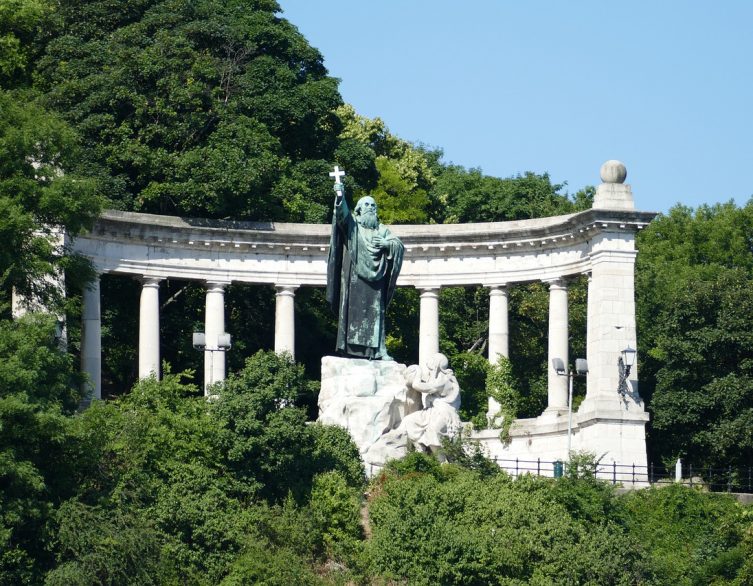
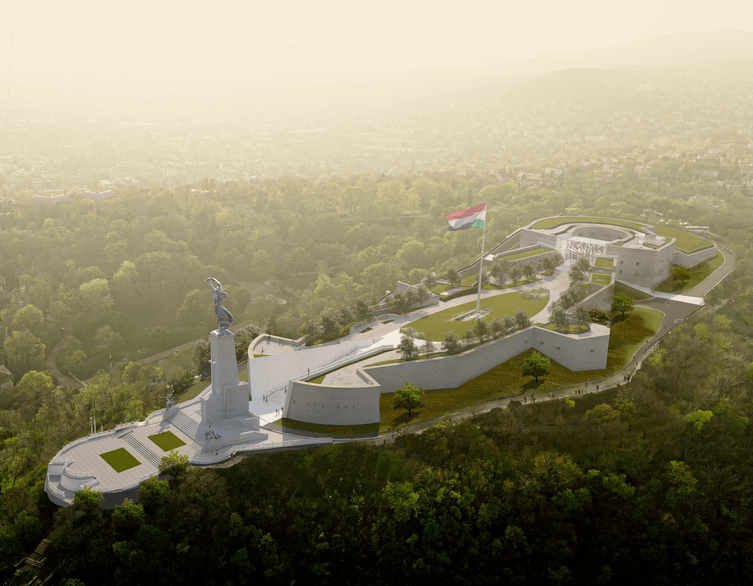
The transformation is remarkable. What was once a closed, single-entrance military ruin has been opened up in three directions, with new entrances and passageways cut through the fortress walls, including a brand new access point at the eastern bastion behind the Liberty Statue. A 6,000 square metre inner park now fills the space within the walls, part of a total 20,000 square metres of green space featuring rare plants, shaded paths, and seating areas. New terraces provide breathtaking views from multiple angles, while energy-efficient night lighting dramatically illuminates the ancient stonework after dark. A public park, viewing terraces, a historical exhibition hall, a café, and a gift shop now make this a destination you could easily spend several hours exploring.
The Restoration’s Guiding Idea
The concept behind the renovation is as thoughtful as the physical work itself. The design team anchored the project in a powerful historical metaphor: the western cannon tower, interpreted as the symbolic “head” of tyranny, has been partially separated from the main fortress body — an architectural gesture representing liberation from oppression. New openings in the fortress walls create connections between the two sides of the hill that never existed before, while previously closed interior spaces are now accessible to everyone. It is history you can walk through, not just read about.
Best deals of Budapest








The physical restoration work was enormous in scale. Nearly 10,000 square metres of masonry was cleaned and renovated, including the cannon tower and the slopes of the gun battery. A full drainage system was built along the entire perimeter of the fortress walls to protect the structure from rainwater damage for decades to come. Limestone from the famous Hungarian quarries at Süttő and Tardos was treated with a protective layer under the supervision of specialist stone conservators. More than 10,000 shrubs, 100,000 perennials, half a million bulb plants, and 128 large trees were planted across the site. This is not a patch-up job — it is a genuine reinvention of one of the city’s great public spaces.
Getting Up There Is Still the Hard Part
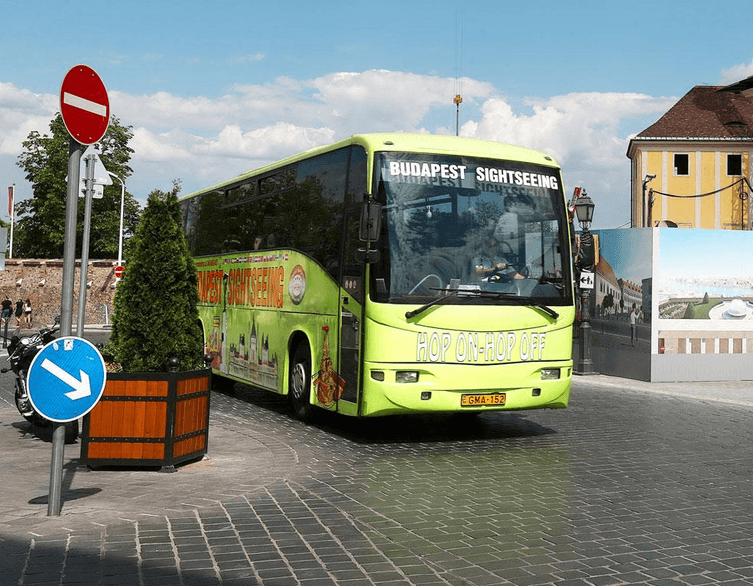
Here is the thing, though: as magnificent as the new Citadella is, getting to the top of Gellért Hill remains an awkward business for visitors. The hill is steep, and while the walk up is rewarding, it is not for everyone — especially in summer heat or after a long day of sightseeing. Bus number 27 serves the hill, but it is primarily designed for local residents and stops at Búsuló Juhász, still a significant uphill walk from the Citadella itself. In practice, most tourists currently reach the hilltop on hop-on hop-off buses or private coaches, which generate considerable traffic, noise, and pollution in what is otherwise a quiet residential neighbourhood.
This is where a compelling proposal re-enters the conversation.
The Funicular Idea: Ninety Seconds to the Top
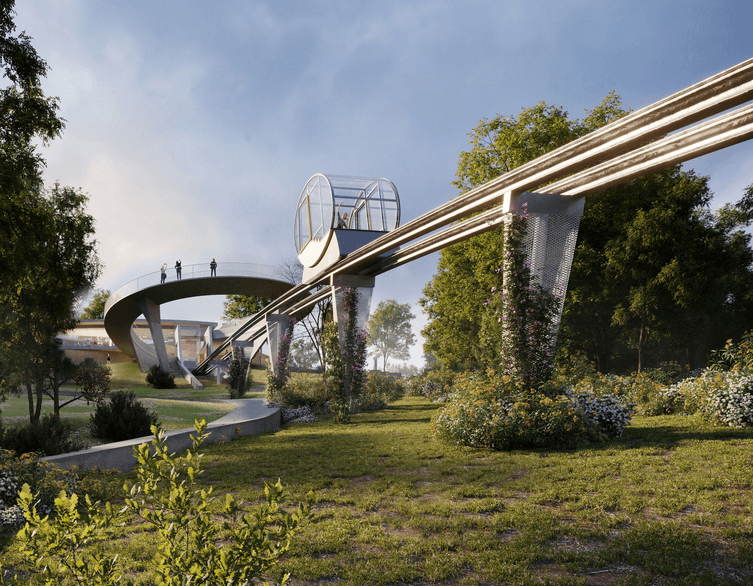
Urban planners and transport enthusiasts have long floated the idea of a Gellért Hill funicular — a fixed-rail cable car that would connect the foot of the hill to the top in under a minute and a half. The concept is elegantly simple: a modern, two-car counterbalanced funicular, running enclosed panoramic cabins up the steep hillside on a route of just a few hundred metres. The journey would take roughly ninety seconds each way, and the system could carry up to 1,200 passengers per hour in each direction — more than enough to handle serious tourist volumes without adding a single extra bus to the roads.
The environmental footprint would be minimal. The rail infrastructure is designed to require very limited surface intervention, preserving the UNESCO World Heritage character of the hillside. The entrance station would be located in an underpass beneath Hegyalja Road, and the cable car would run underground for around 100 metres before emerging above the surface and climbing to the upper station just below the Citadella promenade. Compared to a convoy of diesel-powered tourist buses grinding up narrow streets, the difference in impact is enormous.
A Project with a Long and Complicated History
The idea is not new — and that is precisely the problem. The funicular has been discussed, planned, permitted, stalled, revived, and shelved more times than most people can keep track of. A 2009 agreement between the city and a private investor first set things in motion, and over the years the project acquired a valid building permit, a ten-year environmental licence, and even approval to remove protected trees along the route. In 2020, investor József Kreinbacher — better known for his sparkling wine estates — appeared as a backer behind the project company Gellérthegyi Sikló Kft., raising hopes that construction might finally begin.
Then, in February 2022, Budapest’s municipal council voted to terminate the 2009 agreement entirely, citing the investor’s inability to proceed and what it described as “significant changes in the legal environment.” Mayor Gergely Karácsony acknowledged at the time that the project as originally designed would have posed environmental risks and might not have solved the tourist bus problem it was meant to address. The project company — 25 percent of which is still owned by the Centre for Budapest Transport (BKK) — has not broken ground to this day.
Why Now Might Be the Right Moment to Try Again
With the Citadella now open and already drawing large numbers of visitors, the transport gap at the top of Gellért Hill is more visible than ever. Urban advocacy group BP Műhely has recently called for the funicular project to be dusted off and reconsidered, arguing that the Citadella’s reopening gives the proposal fresh urgency and political relevance. A funicular of this kind would not merely be a useful piece of transport infrastructure — it would be an attraction in its own right, the kind of experience that puts a city on travellers’ wish lists and keeps them there.
Budapest already knows this formula well. The Castle Hill Funicular, which has been carrying passengers between the Danube embankment and Buda Castle since 1870, is one of the most photographed and beloved experiences in the city. A Gellért Hill equivalent could do for the southern Buda hills what that historic railway has done for the Castle District — and do it with far less environmental impact than the current situation. For now, visitors will need to walk, take bus 27 to the Búsuló Juhász stop and continue on foot, or join a hop-on hop-off tour to reach the Citadella. But if the funicular dream finally becomes reality, the view from the top will be even easier to fall in love with.
Follow Budappest.com on Facebook
Related news
Budapest’s Citadella Is Back — and It’s Better Than Ever
If you’ve ever looked up at Gellért Hill while crossing one of Budapest’s famous bridges and wondered about that striking fortress crowning...
New Bus Rules on Gellért Hill: What Tourists Need to Know Before Visiting the Citadella
Budapest’s most dramatic hilltop is about to get a little more peaceful — and a lot more exciting. Gellért Hill, home to the newly renovated...
Citadella Reopens Soon: Electric Buses Transform Buda Tours in Budapest
Budapest’s Buda side is gearing up for smoother adventures with the Citadella reopening soon and eco-friendly buses replacing big tour coaches....
Related attractions