Space-Traveled Hungarian Relics at the Hungarian National Museum
Discover Hungary’s Journey to the Stars
If you’ve ever dreamed of touching something that has truly been to space, this exhibition in Budapest is your chance. The Hungarian National Museum’s Rotunda is currently showcasing a remarkable collection of artifacts that have traveled beyond Earth’s atmosphere — connecting visitors to two defining eras of Hungarian space exploration.
This unique display celebrates the stories and achievements of Bertalan Farkas, Hungary’s first astronaut in 1980, and Tibor Kapu, who made history in 2025 as the second Hungarian researcher-astronaut aboard the International Space Station (ISS). Together, their journeys mark Hungary’s proud contribution to the world’s space endeavors across generations.
From Soyuz to SpaceX – Two Eras, One Vision
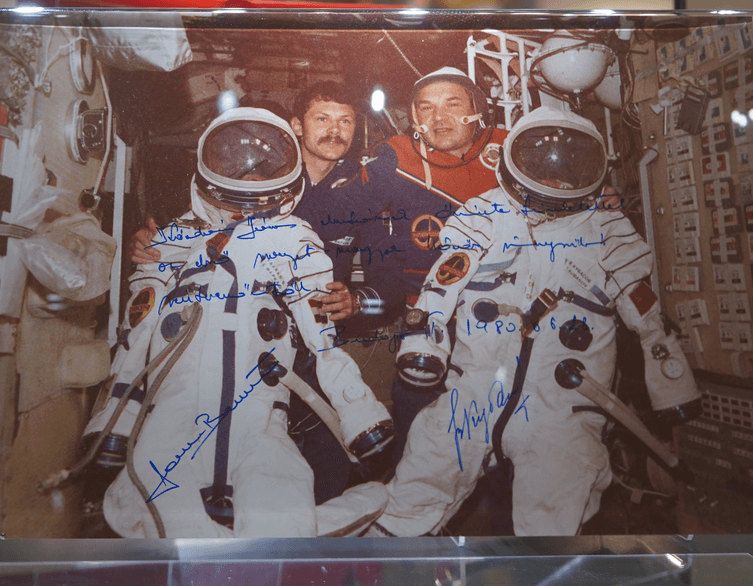
The exhibition begins with a nostalgic look back at Bertalan Farkas’s pioneering mission aboard Soyuz–36. On May 26, 1980, Farkas and Soviet cosmonaut Valery Kubasov launched into orbit, later docking with the Salyut–6 space station. Their eight-day mission made Hungary the seventh nation in the world to join the community of spacefaring countries.
Visitors can view stunning original relics from this historic journey — including a photograph signed aboard Salyut–6 and dedicated to Hungarian leader János Kádár, as well as Hungarian and Soviet flags that actually traveled into space. Commemorative plaques, medals, and decorative objects also evoke the spirit of Cold War–era scientific cooperation and Hungary’s growing influence in space research.
Modern Exploration: Tibor Kapu’s Historic 2025 Mission
The exhibition’s second section celebrates Tibor Kapu’s 2025 space mission, a major milestone in contemporary Hungarian science. Launching from the Kennedy Space Center aboard SpaceX’s Crew Dragon “Grace” spacecraft as part of the Axiom Mission 4 (Ax-4), Kapu spent 20 days aboard the International Space Station.
Best deals of Budapest











During his time in orbit, he tested Hungarian-developed space instruments and conducted 25 scientific experiments prepared by domestic researchers. His mission set a national record, making him the Hungarian astronaut who has spent the most continuous time in space.
Among the most fascinating artifacts are Kapu’s personal items: miniature multilingual editions of Himnusz and Szózat, Hungary’s national anthem and patriotic poem. These family heirlooms traveled with him to space and have since been certified “flown to space” by Axiom Space. Interestingly, while the Himnusz appeared in photographs taken aboard the ISS, the Szózat stayed inside the docked Dragon capsule — both charting their own symbolic journeys beyond Earth.
Visitors will also see the Hungarian flag carried by Tibor Kapu during his mission, now donated to the museum’s collection alongside official documentation of authenticity signed by mission commander Peggy Whitson.
A Bridge Between Past and Present
Together, these artifacts tell a powerful story — one that connects Hungary’s trailblazing achievements in the 1980s with the cutting-edge space science of today. The exhibition is more than a showcase of technology; it’s a reflection of national pride, human ambition, and the timeless curiosity that drives exploration.
Best of all, you can experience this fascinating journey free of charge — no admission ticket required.
Plan Your Visit
- Venue: Hungarian National Museum, Rotunda
- Dates: Currently on display
- Admission: Free entry
Step inside the Hungarian National Museum and experience the incredible legacy of Hungary’s cosmic adventures. These space-traveled relics offer a rare glimpse into human ingenuity and remind us that even a small nation can reach for the stars — and get there.
Related news