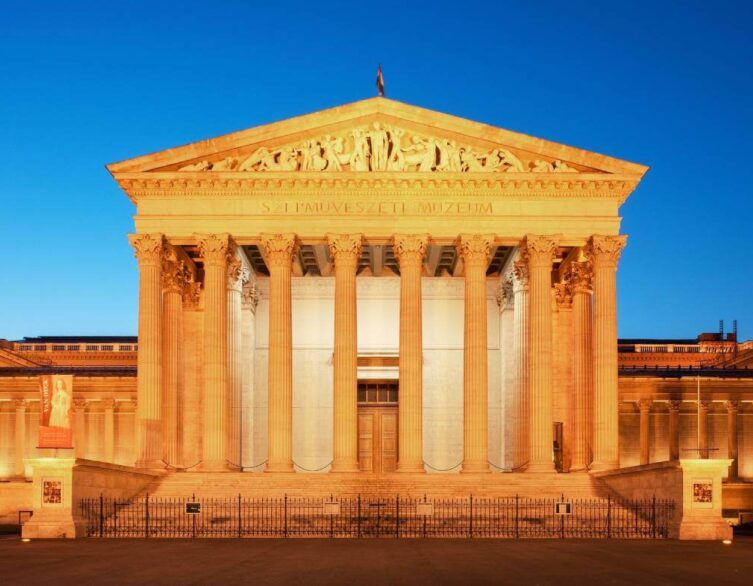
Desire for an Earthly Paradise: One of Budapest’s Most Significant Cultural Events This Year
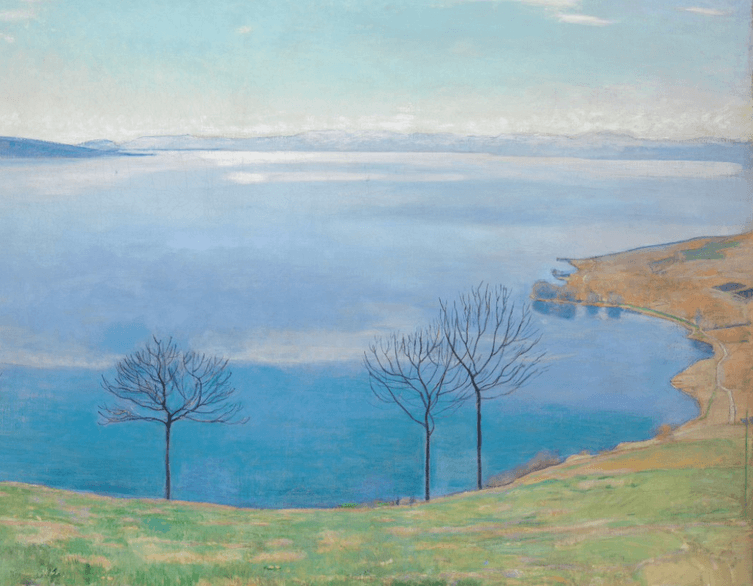
There are exhibitions, and then there are once-in-a-generation events. Desire for an Earthly Paradise — Masterpieces of Swiss Art from the Christoph Blocher Collection, currently on display at Budapest’s Museum of Fine Arts until June 7, 2026, firmly belongs to the second category. This is the first time this world-class private collection has ever been shown outside Switzerland — and it chose Budapest as the place to make history.
A Collection That Has Never Traveled Before
Over several decades, Silvia and Christoph Blocher assembled one of the most comprehensive and celebrated private collections of Swiss art in existence, featuring nearly 60 masterworks by the greatest names in Swiss art history. Individual paintings from the collection have previously been loaned to exhibitions in Europe, Japan, America, and China, but they have never journeyed together as a cohesive whole — until now. The fact that Budapest’s Museum of Fine Arts secured this exclusive international debut is a major coup for the city’s cultural calendar and a testament to the museum’s growing international standing.
The collection spans artistic movements from Realism through Symbolism to Expressionism, and brings together works by Albert Anker, Ferdinand Hodler, Giovanni Segantini, Félix Vallotton, Giovanni and Augusto Giacometti, Cuno Amiet, and Adolf Dietrich. As the museum’s director László Baán has noted, there has never been a Swiss art exhibition of this scale in Hungary — nor, indeed, anywhere outside Switzerland itself.
The Story Behind the Loan: Why Budapest?
Perhaps one of the most touching aspects of this exhibition is the deeply personal reason Christoph Blocher agreed to bring his beloved collection to Hungary. When asked why he said yes to Budapest, he admitted to being momentarily lost for words — “after all,” he said, “one acts for emotional rather than necessarily explainable reasons.”
Blocher has spoken warmly and at length about his lifelong bond with Hungary. He vividly recalls a cold winter morning during his agricultural studies, when he and his classmates cycled five kilometres to school across vast open fields. At midday, they stopped and stood in silence for five minutes as church bells rang out from every Swiss church — a collective act of solidarity with the Hungarian freedom fighters whose uprising was being crushed by Soviet tanks in 1956. That memory never left him. Switzerland welcomed many Hungarian refugees in those years, particularly students, and Blocher counts several Hungarians among his closest friends from that era — friendships that have remained intense and enduring ever since.
The exhibition also arrives at a meaningful historical moment: 2026 marks the 80th anniversary of diplomatic relations between Switzerland and Hungary. For Blocher, lending the collection to Budapest is an expression of hope that the deep bond between the two countries will continue to grow. “If many visitors enjoy these paintings,” he has said warmly, “that will bring joy to my wife and me.”
Best deals of Budapest





Where the Paintings Normally Live
There is something almost poetic about the journey these paintings have made to Budapest. Blocher has described how the works are normally housed in a quiet, mostly dark building set in a lateral moraine of the Linth Glacier — a natural ridge left behind when the glacier retreated some 8,000 years ago after the last ice age, shaping the landscape that also gave rise to Lake Zurich. The paintings sit there in the dark, safe and still, in the gentle folds of ancient geological history.
“And now,” Blocher says with evident delight, “they get to venture out into the wider world — to Budapest.” The contrast between their serene Alpine home and the grand neoclassical halls of one of Europe’s great museums makes this exhibition feel like a rare and privileged encounter.
Why This Exhibition Matters for Budapest
Budapest has long established itself as one of Central Europe’s foremost cultural capitals, and 2026 is a particularly rich year for the city’s art scene. The Museum of Fine Arts is celebrating its 120th anniversary, and Desire for an Earthly Paradise is one of the anchor exhibitions of that commemorative year. The museum is a world-famous institution where visitors encounter masterpieces from across the globe, including medieval works — and Blocher himself described the experience of seeing his Swiss paintings installed there as “fantastic.”
The World of Albert Anker
Albert Anker was a theologian who became one of Switzerland’s most beloved painters, and the Blocher Collection is particularly rich in his work. Anker devoted his career to portraying the children and villagers of rural Switzerland, but what separates him from sentimental genre painters is his insistence on dignity. The children he painted carry an inner gravity — they are portrayed as autonomous individuals with their own inner lives, not as decorative subjects. Looking at his portraits today, you can also sense the weight of social expectation that the 19th century placed on the very young.
Ferdinand Hodler’s Transcendent Landscapes
Ferdinand Hodler is widely regarded as Switzerland’s greatest painter, and the exhibition gives his work the prominence it deserves. Taking full advantage of the new mountain railway lines being built across Switzerland in the late 19th century, Hodler sought out remote, untouched landscapes that had never been painted before. He worked in solitude, stripping his compositions of anecdotal detail and human figures to reveal the essential, almost spiritual character of the land. His decades-long series of Lake Geneva paintings — ranging from meticulous naturalism to something approaching transcendental abstraction — are among the most quietly powerful works in the show.
A New Generation: The Mountain Painters
By the 1890s, a fresh wave of Swiss painters emerged as active participants in the European modernist movements. Giovanni Segantini, Giovanni Giacometti, and his cousin Augusto Giacometti brought symbolic and spiritual dimensions to the Alpine landscape, painting the Engadin Valley as the setting for reinterpreted Christian themes. Artists like Cuno Amiet brought the bold colors and forms of the Die Brücke group, while Félix Vallotton and Adolf Dietrich developed distinctive strands of what we might now call magical realism. Together, these works show that while Switzerland never produced a single national school of painting, it produced something arguably richer: a constellation of uniquely individual voices united by a shared love of their land.
The Curatorial Vision
The exhibition is organized into eleven sections, split between two overarching themes: the intimacy of human life — family, childhood, everyday rituals — and the grandeur of the natural world, particularly the Swiss Alps and lakes. This dual structure reflects the exhibition’s title beautifully: the “earthly paradise” the artists were searching for was found both in the warmth of a family kitchen and in the silence of a mountain summit at dawn.
The exhibition was curated by Matthias Frehner, a Swiss art historian and former director of the Kunstmuseum Bern, working in close collaboration with the Museum of Fine Arts’ own curators Dóra Lovass and Zsuzsanna Bors-Bulbuk.
Practical Information
Getting There
The Museum of Fine Arts is one of Budapest’s most iconic buildings, located on Heroes’ Square (Hősök tere) in District XIV. It is easily reachable by metro on the M1 (yellow) line to Hősök tere. The square itself — flanked by the Heroes’ Monument and the Palace of Art — is one of the most photographed spots in the city, making the journey there part of the experience.
Tickets and Hours
- Venue: Museum of Fine Arts (Szépművészeti Múzeum), Second Floor, Temporary Exhibition Gallery
- Address: Dózsa György út 41, 1146 Budapest
- Dates: March 27 – June 7, 2026
- Opening hours: Tuesday to Sunday, 10:00–18:00
- Tickets: Available online at ligetplusz.hu — advance booking recommended
Make a Day of It
The museum is right next to City Park (Városliget), Budapest’s beloved green lung, making it easy to combine the exhibition with a walk through the park, a visit to Vajdahunyad Castle, or a soak at the famous Széchenyi Thermal Bath just a few minutes away on foot. It is one of those rare afternoons where culture, history, and relaxation all slot perfectly together.
Follow Budappest.com on Facebook
Related events
Related attractions