Robert Capa’s 1948 Budapest: A Rare Photo Exhibition at the Capa Center
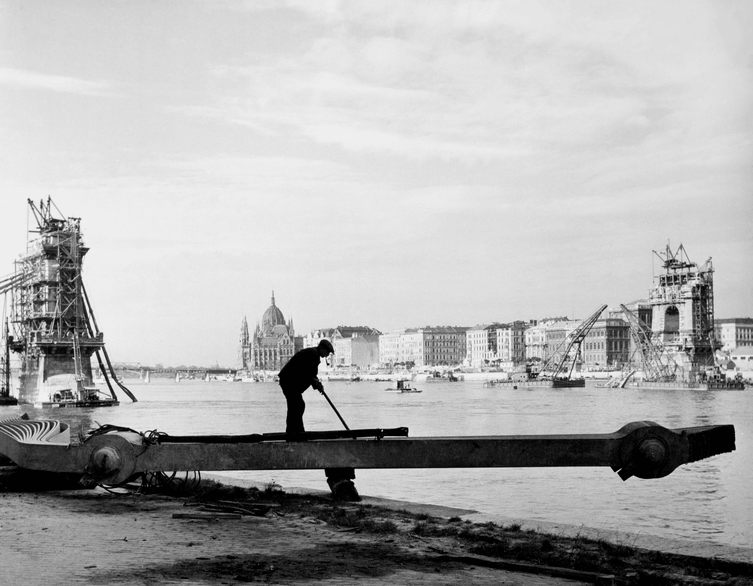
If you’re visiting Budapest and have a soft spot for history, photography, or both, this is one exhibition you won’t want to miss. The Robert Capa Contemporary Photography Center on Nagymező Street is currently showcasing a remarkable collection of photographs taken by the legendary war photographer Robert Capa during his 1948 visit to his hometown — and most of these images have never been seen by the Hungarian public before.
Who Was Robert Capa?
Born in Budapest as Friedmann Endre, Robert Capa left Hungary in 1931 and went on to become one of the most celebrated photojournalists in history. He co-founded the iconic Magnum photo agency, traveled alongside John Steinbeck as they documented post-war Russia, and became a vocal advocate against the Iron Curtain and Cold War hostilities. By the time he returned to Budapest in the autumn of 1948, he was a 35-year-old American citizen at the height of his career.
A City Like a Beautiful Woman with Knocked-Out Teeth
That’s exactly how Capa described Budapest in 1948 — and the photographs on display capture that haunting in-between moment perfectly. His visit lasted from early September to mid-October 1948, a brief window during which Hungary was simultaneously celebrating the centenary of the 1848–49 revolution and quietly sliding into Stalinist dictatorship.
The images document a city and a society caught in transition: workers rebuilding the Chain Bridge, students, children, pedestrians, musicians, and war-scarred urban spaces — all observed through the lens of a man returning to the city where he grew up. The series was originally published in the November 1949 issue of the American Holiday magazine under the title “Budapest Conversation,” but it stood apart from Capa’s usual light travel pieces. This one was personal.
As Capa himself wrote in 1952: “The most professional American tourists call themselves foreign correspondents, and if they were born outside the United States, their favorite subject is the return. I returned to Budapest because I happened to be born there, and because the place only allowed a return for a short season.”
Best deals of Budapest




What to Expect at the Exhibition
The exhibition brings together around fifty black-and-white and color photographs, curated by Dr. Éva Fisli, Head of Department at the Historical Photo Archive of the Hungarian National Museum. The selection was made in collaboration with the International Center of Photography (ICP) in New York, founded by Capa’s brother Cornell Capa.
Alongside previously published works, the exhibition also features contact prints and images that have genuinely never been displayed publicly in Hungary before. Together, they reconstruct what topics and scenes captured Capa’s attention during this final, brief homecoming — because after 1948, he never returned.
Two Exhibitions in One Visit
One of the best things about visiting the Capa Center right now is that you can pair this new exhibition with the permanent Robert Capa retrospective that has been on display since 2021. Titled Robert Capa, the Reporter, the permanent collection traces Capa’s entire career from his early European years to his legendary war photography, based on the Master’s Set III collection purchased by the Hungarian state.
Seeing both exhibitions in a single visit gives you a uniquely complete picture of Capa’s life and work — from his globally recognized wartime imagery to these deeply personal photographs of the city where it all began.
Practical Information
- Location: Robert Capa Contemporary Photography Center, 1065 Budapest, Nagymező utca 8
- Dates: April 9 – August 23, 2026
- Tuesday–Friday: 1:00 PM – 6:00 PM
- Saturday–Sunday: 10:00 AM – 6:00 PM
- Closed on Mondays and public holidays
The Capa Center is located in the heart of Budapest’s theater district, making it easy to combine your visit with a stroll along Andrássy Avenue or a stop at the nearby Broadway quarter. Whether you’re a photography enthusiast, a history buff, or simply curious about Budapest’s past, this exhibition offers a rare and moving glimpse into a city rebuilding itself — seen through the eyes of the man who once called it home.