Desire for an Earthly Paradise: Swiss Art Masterpieces at Budapest’s Museum of Fine Arts
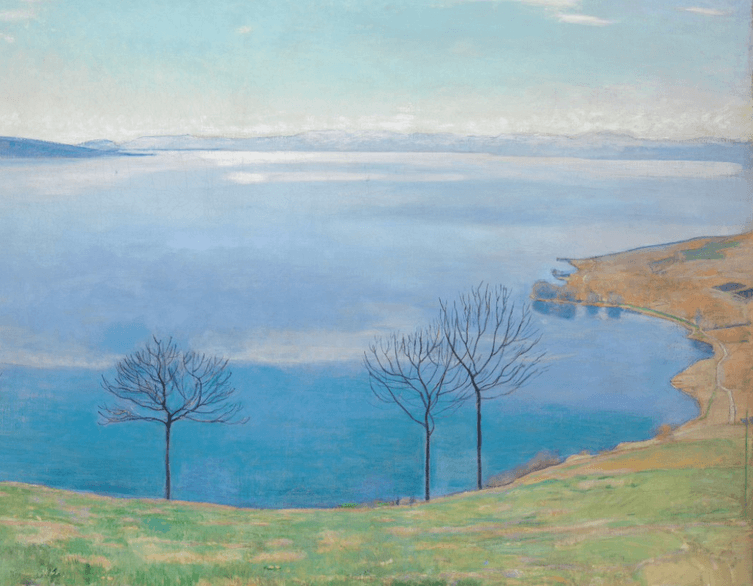
If you love art and are visiting Budapest this spring or early summer, the Museum of Fine Arts is home to one of the most extraordinary exhibitions the city has seen in years. Desire for an Earthly Paradise — Masterpieces of Swiss Art from the Christoph Blocher Collection is on display until June 7, 2026, and it marks the very first time this remarkable private collection has ever been shown outside of Switzerland.
About the Exhibition
Over several decades, Silvia and Christoph Blocher assembled one of the most significant private collections of Swiss art in the world, and Budapest’s Museum of Fine Arts secured this exclusive international debut. The exhibition brings together nearly 60 works that trace the development of Swiss art from Realism through Symbolism to Expressionism, offering visitors a rare and sweeping overview of 19th and early 20th-century Swiss painting.
The collection features works by some of the most celebrated names in Swiss art history: Albert Anker, Ferdinand Hodler, Giovanni Segantini, Félix Vallotton, Giovanni and Augusto Giacometti, Cuno Amiet, and Adolf Dietrich. As Christoph Blocher himself notes, many of these paintings have previously traveled individually to exhibitions in Europe, Japan, America, and China — but this is the first time they have ever journeyed together.
Why Budapest?
Blocher’s decision to bring the collection to Hungary is a deeply personal one. He has spoken warmly of his long connection to Hungary and the Hungarian people, vividly recalling how Switzerland rang its church bells in solidarity when Soviet tanks crushed the Hungarian uprising in 1956. The exhibition also coincides with the 80th anniversary of diplomatic relations between Switzerland and Hungary in 2026, making it a meaningful cultural and historical milestone for both nations.
What You Will See
The exhibition is organized into eleven sections, divided into two broad themes. The first half focuses on human connection — intimate family scenes, portraits, and glimpses of everyday life. The second half takes you into the natural world, specifically the breathtaking Swiss Alpine landscape that inspired generation after generation of these artists.
Best deals of Budapest






Albert Anker and the Dignity of Childhood
One of the highlights of the Blocher Collection is the work of Albert Anker, a theologian turned painter who devoted much of his career to portraying the children of his village. What sets Anker apart is how he painted children — not as cute subjects, but as serious, autonomous individuals with their own inner lives. His portraits radiate a quiet dignity that also subtly reflects the social expectations and burdens placed on children in 19th-century rural Switzerland.
Ferdinand Hodler’s Iconic Landscapes
Ferdinand Hodler was a bold innovator who used the newly built Swiss mountain railways to seek out remote, unpainted landscapes, far from popular tourist viewpoints. He worked in solitude, concentrating on a single motif to capture its essential character. By deliberately removing human figures from his landscapes, Hodler transforms the scenery into something almost transcendent. His many paintings of Lake Geneva — spanning roughly 50 years of his career — range from naturalistic detail to the edge of abstract spirituality, and several of these iconic works are on display here.
The Mountain Painters
By the 1890s, a new generation of Swiss painters emerged who blended the modernist currents of the age with a deep attachment to the Swiss landscape and national identity. Artists like Giovanni Segantini, Giovanni Giacometti, and Augusto Giacometti brought a syncretic, symbolic spirituality to their depictions of the Engadin Valley, reinterpreting Christian themes within the framework of Alpine scenery. Their work explores the expressive and decorative power of line and color in ways that feel thoroughly modern even today.
The Curators
The exhibition was curated by Matthias Frehner, a Swiss art historian and former director of the Kunstmuseum Bern, working alongside co-curators Dóra Lovass, curator of the Museum of Fine Arts’ International Collection after 1800, and Zsuzsanna Bors-Bulbuk, art historian at the museum.
Practical Information
Visiting Details
- Venue: Museum of Fine Arts (Szépművészeti Múzeum), Second Floor, Temporary Exhibition Gallery
- Address: Dózsa György út 41, 1146 Budapest (Heroes’ Square, District XIV)
- Dates: March 27 – June 7, 2026
- Opening hours: Tuesday to Sunday, 10:00–18:00
Getting There
The Museum of Fine Arts sits right on Heroes’ Square (Hősök tere), one of Budapest’s most iconic locations. You can reach it easily by metro — take the M1 (yellow) line to the Hősök tere stop. The museum is also a short walk from City Park (Városliget), so you can easily combine your visit with a stroll through the park or a stop at the nearby Széchenyi Thermal Bath.
Tickets
Tickets can be purchased online at ligetplusz.hu. Booking in advance is recommended, especially during weekends and public holidays.
Related news