Beneath the Surface: The New Holocaust Memorial at Liszt Ferenc Square in Budapest
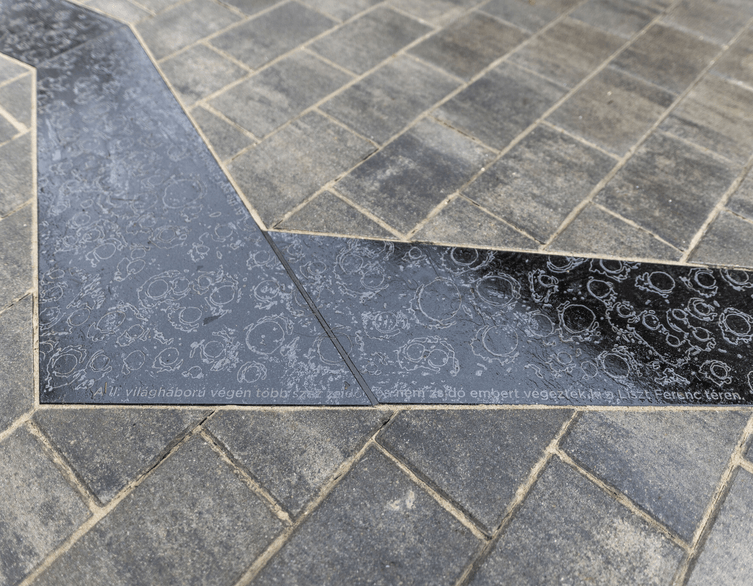
In the heart of Budapest’s elegant 6th district, not far from the vibrant cafés and music that fill Liszt Ferenc Square, a new memorial interrupts the hum of daily life with quiet gravity. Completed in December 2025, the Liszt Ferenc Square Holocaust Memorial peels back the surface of the city — both literally and metaphorically — revealing the dark memories buried beneath its stones.
A Forgotten Tragedy Comes to Light
Few passersby once knew that during the final, chaotic months of World War II, Liszt Ferenc Square was one of Budapest’s largest mass grave sites. In January 1945, hundreds of Jewish and non-Jewish victims were executed here by the Arrow Cross militia — the Hungarian collaborators of the Nazi regime. Their bodies were hastily buried in the frozen earth, later exhumed in 1946, and then… silence. For decades, the tragedy remained largely unspoken, absent even from many historical accounts of the Holocaust and the Siege of Budapest.
That silence has finally been broken. Thanks to an initiative by the local Terézváros Municipality, a public design competition was launched to create a dignified memorial. Out of fourteen proposals, the winning concept — Hasadás (meaning “Fracture”) — was submitted by architect Vera Krauth of the Individin Design Studio.
Cracks That Speak Without Words
Rather than towering upwards, the memorial unfolds beneath our feet. Across six points of the square, the pavement splits into jagged lightning-shaped fractures made of dark granite. The fissures run like veins through the square, impossible to ignore but seamlessly integrated into the rhythm of urban life. Their surfaces are etched with delicate graphic patterns — abstract shapes that, upon closer look, suggest faces and human silhouettes emerging from shadow.
Best deals of Budapest






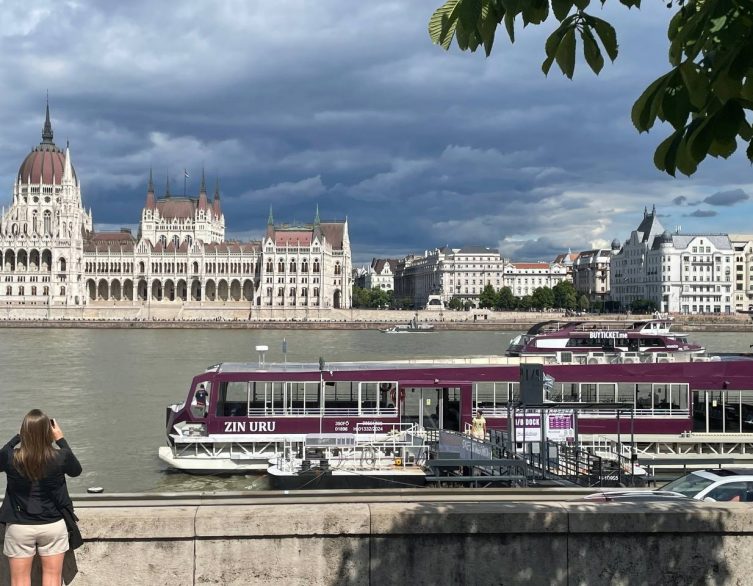
These cracks recall not only the shattering of lives but the rupture in collective memory itself. As Krauth explained, the goal was for visitors to feel as though “the earth itself opens, revealing the buried past.” The materials evoke tombstones, and the design draws inspiration from other understated memorial traditions — such as the stolpersteine, the small brass “stumbling stones” laid across Europe in remembrance of individual Holocaust victims.
A Ceremony of Memory and Responsibility
The memorial was inaugurated on a gray, rainy day — fitting for a site where history seeps through the ground. Among those present were survivors’ descendants, members of Budapest’s Jewish community, and civic leaders. Mayor Tamás Soproni reminded those gathered that “silence is always the ally of evil,” and that remembrance is not only about the past but about the moral choices we face today. “This memorial,” he said, “doesn’t want to comfort us. It wants to make us think — because every era gives us a choice: whether to look away or to speak up.”
Where Memory and the City Intersect
Liszt Ferenc Square remains one of the city’s liveliest meeting points — a place of concerts, terraces, and laughter. Now, beneath its surface, an invisible history has re-emerged to share the same space. The memorial does not compete with existing monuments or statues; instead, it offers a quiet interruption, a space to pause and reflect.
For visitors exploring Budapest’s Jewish heritage, this site offers a powerful reminder that remembrance can take many forms — sometimes not in grand gestures but in the cracks that refuse to close.
Related news
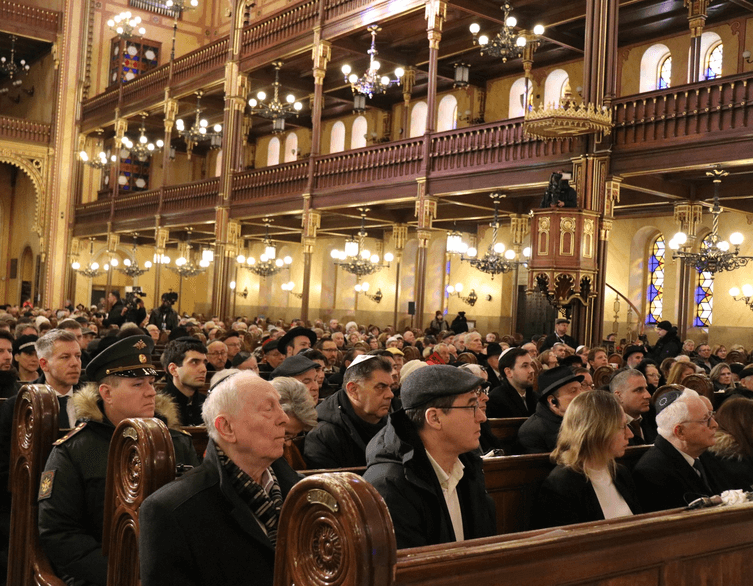
Remembering the Budapest Ghetto: A Solemn Tribute to Courage and Memory
On a quiet Sunday morning in Budapest, history echoed once again in the heart of Erzsébetváros, as the city and the Jewish community came together...
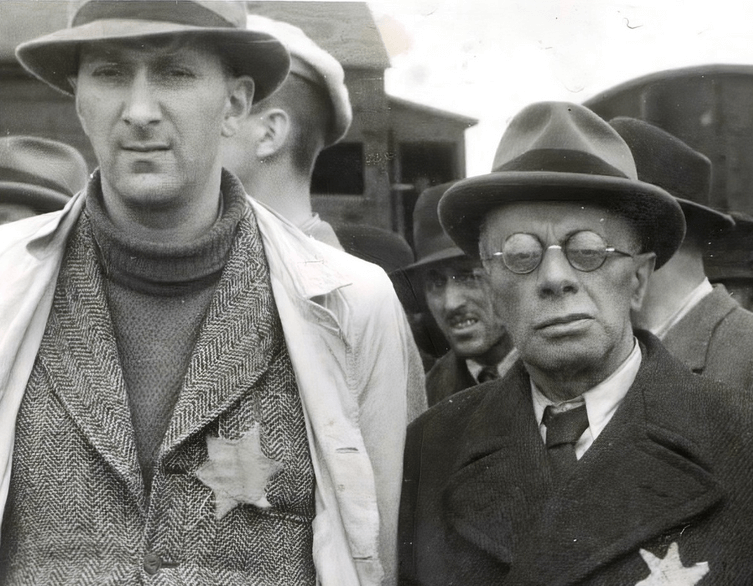
Budapest Opens a Special Exhibition To Commemorate The International Holocaust Remembrance Day
A Universal Moral Benchmark The Holocaust, 80 years after the liberation of Auschwitz-Birkenau, remains not only a painfully recent historical event...
Related attractions
Raoul Wallenberg Holocaust Memorial Park: A Tribute to Victims
Budapest, the vibrant capital of Hungary, is home to a poignant reminder of the darkest chapter in human history – the Raoul Wallenberg Holocaust...
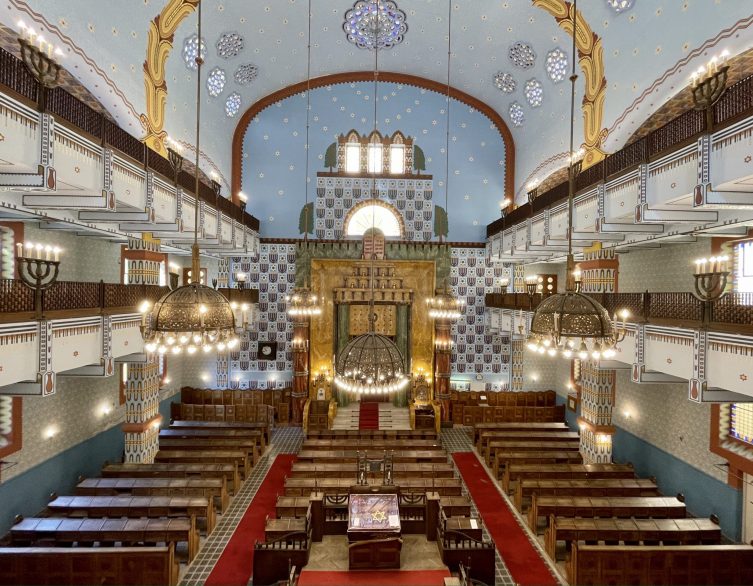
The Kazinczy Street Synagogue: The Center for the Orthodox Jewish Community
When visiting Budapest, one of the must-see attractions for foreign tourists is the Kazinczy Street Synagogue. This architectural marvel, built between...
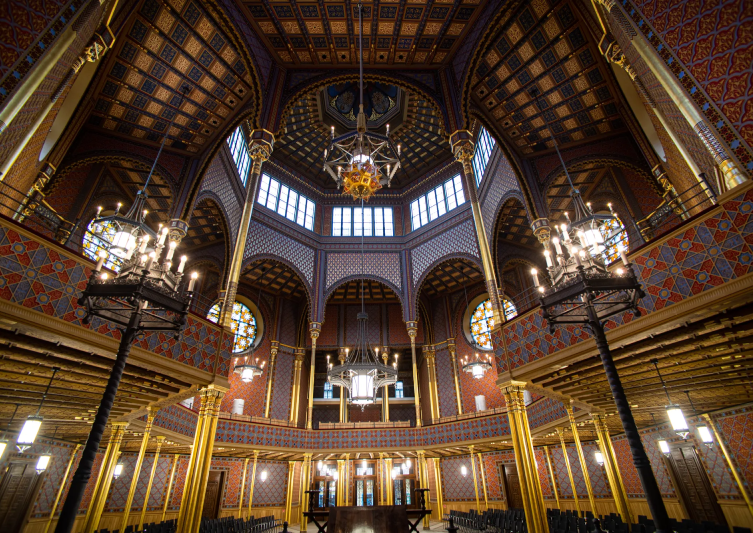
The Rumbach Street Synagogue: Discover The Restored Sacred Center
The Rumbach Street Synagogue, located in the heart of Budapest, is a stunning architectural masterpiece that showcases the genius of Austrian architect...
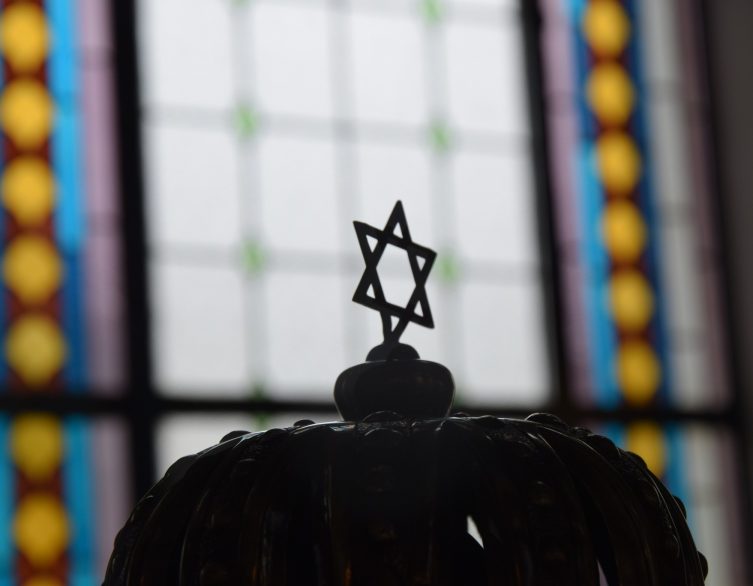
The Jewish Memorial Center: Honoring the Past in Budapest
Located in the heart of Budapest’s historic Jewish Quarter, the Jewish Memorial Center (Holokauszt Emlékközpont) stands as a powerful tribute...
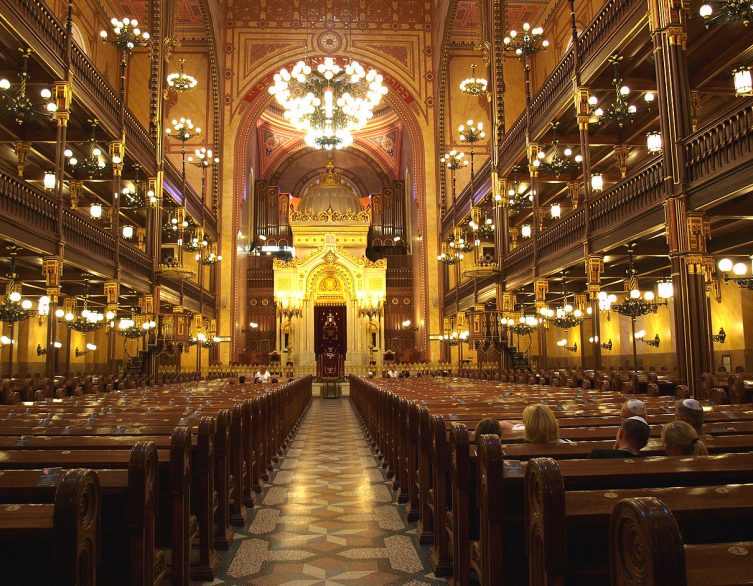
Dohány Street Synagogue: Budapest’s historic Jewish gem
The Dohány Street Synagogue, located in the heart of Pest, Budapest, stands as a monumental beacon of Jewish history and culture. Built in the 19th...